

Breastfeeding vs Bottle Feeding: Finding What Works for You
Feeding your baby is one of the very first decisions you will make as a parent — and often one of the most emotionally charged. Many families feel pressure to choose the “right” option, surrounded by advice, opinions, and expectations from every direction.
At Nurturing Maternity Support, we believe that how you feed your baby is your choice. There is no single best method — only what works best for you, your baby, and your family.
This blog explores breastfeeding and bottle feeding in a balanced, non-judgemental way, helping you feel informed, supported, and confident in whichever path you choose.
Why Feeding Choices Can Feel So Overwhelming
Feeding is about more than nutrition. It is closely tied to identity, expectations, and emotions — particularly in the early weeks after birth when parents are tired, vulnerable, and adjusting to enormous change.
Many parents feel pressure to breastfeed, worry about judgement if they don’t, or experience guilt when feeding doesn’t go as planned. Others feel anxious about whether bottle feeding will affect bonding.
The truth is this: a fed baby and a supported parent matter far more than the method of feeding.
Breastfeeding: Benefits and Considerations
Breast milk is uniquely designed for human babies and adapts to meet their changing needs. Many families choose breastfeeding for its biological and emotional benefits.
Potential benefits of breastfeeding include:
Nutrients and antibodies tailored to your baby
Support for the immune system
Oxytocin release that promotes bonding
Convenience once established
No preparation or sterilising required
Breastfeeding can also support physical recovery after birth by encouraging uterine contractions and hormone regulation.
Challenges to be aware of
Although breastfeeding is natural, it is not always easy. Many parents experience:
sore or damaged nipples
latch or positioning difficulties
concerns about milk supply
frequent feeding, especially in the early weeks
exhaustion during cluster feeding phases
These challenges are common — and support can make a significant difference. However, it’s also important to recognise that breastfeeding is not always possible or appropriate for every family, and stopping does not represent failure.

Bottle Feeding: Benefits and Considerations
Bottle feeding may involve expressed breast milk, formula, or a combination of both. For many families, bottle feeding provides flexibility, predictability, and shared caregiving.
Potential benefits of bottle feeding include:
shared feeding responsibilities
easier tracking of intake
flexibility around work or recovery
consistent feeding routines
reduced pressure on the birthing parent
Bottle feeding allows partners and loved ones to play an active role in early care, which can support bonding and rest.
Considerations
Bottle feeding requires:
preparation and sterilisation
planning when out and about
financial cost if using formula
However, bonding is not determined by feeding method. Eye contact, responsiveness, cuddles, and closeness nurture attachment — regardless of whether feeding is from breast or bottle.
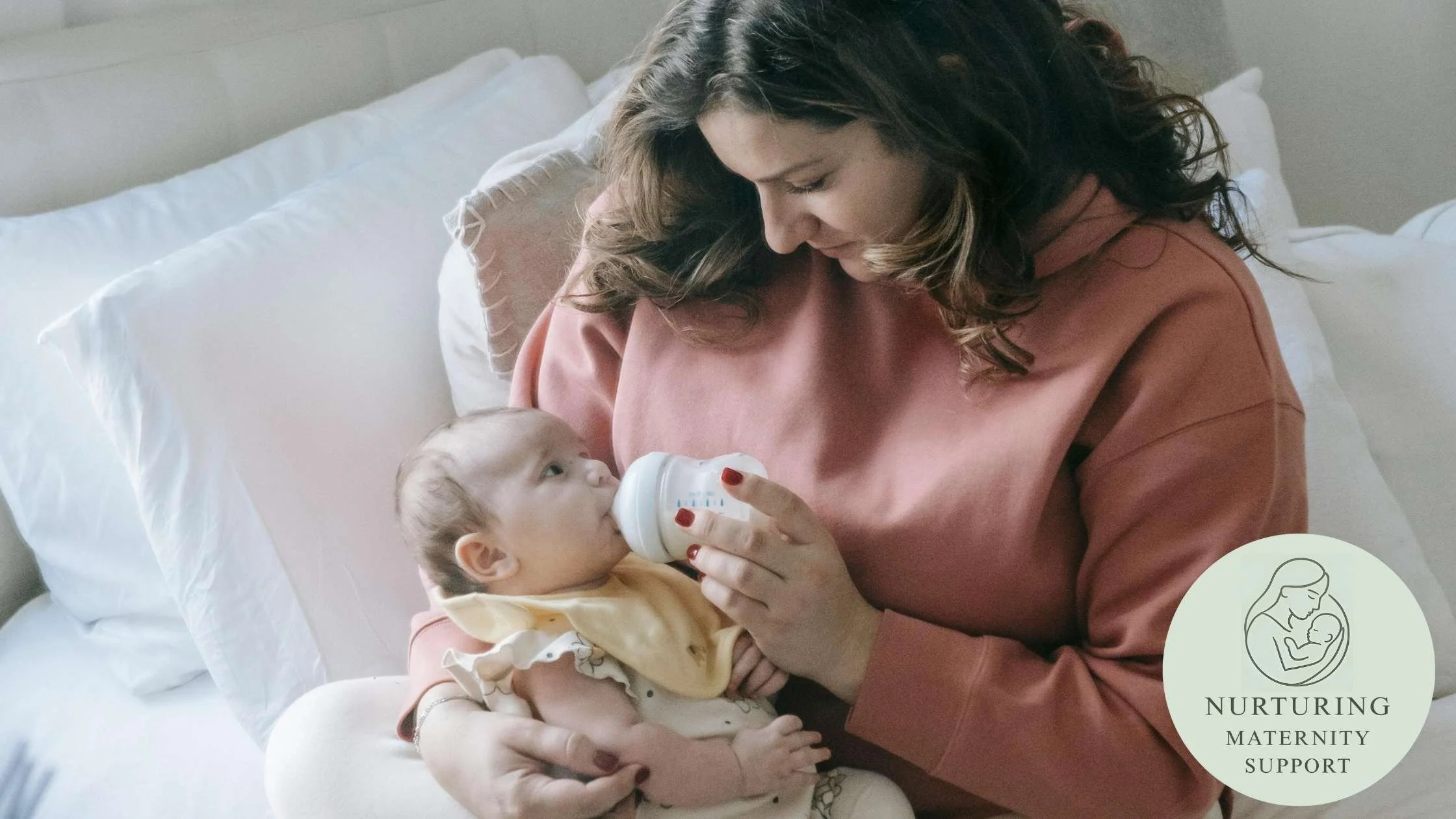
Combination Feeding: A Flexible Option
Many families choose combination feeding, using both breast and bottle feeding. This approach can offer balance and adaptability, particularly during periods of recovery, returning to work, or managing supply concerns.
Combination feeding may include:
breastfeeding alongside expressed milk
breastfeeding during the day and bottle feeds at night
transitioning gradually from breast to bottle
supplementing while continuing to breastfeed
This approach can work well when guided gently and with support, particularly if maintaining milk supply is important to you.
The Emotional Side of Feeding
Feeding journeys are rarely straightforward. Even when things go well, emotions can be intense. When feeding is difficult, feelings of guilt, disappointment, or grief are common.
It is possible to feel grateful your baby is fed and still mourn the feeding experience you hoped for. These feelings are valid.
At Nurturing Maternity Support, we hold space for these emotions without judgement. Feeding should not come at the cost of your mental health or wellbeing.
Letting Go of Feeding Myths
There are many myths that place unnecessary pressure on families:
“Breastfeeding is easy if you try hard enough.”
→ It is a learned skill and can take time and support.“Formula feeding means you didn’t try.”
→ Formula exists to nourish babies safely and effectively.“Bottle-fed babies don’t bond as well.”
→ Bonding comes from responsive caregiving, not feeding method.“Once you switch, you can’t go back.”
→ Many families move fluidly between feeding methods.
Releasing these myths allows parents to make decisions based on wellbeing rather than fear.
What Matters Most
Babies thrive when they are:
fed adequately
held close
responded to consistently
surrounded by calm, supported caregivers
Parents thrive when they are:
informed
supported
rested where possible
free from judgement
Feeding choices should support the health of the entire family — not just one person.
How Nurturing Maternity Support Helps
At Nurturing Maternity Support, we provide balanced, evidence-based guidance that respects parental choice. We support families to:
explore feeding options antenatally
understand what is normal in early feeding
feel confident regardless of feeding method
navigate combination feeding
process emotions linked to feeding experiences
prioritise wellbeing alongside infant nutrition
Our role is not to push an agenda — it is to empower families with knowledge, reassurance, and compassion.
Final Thoughts
Breastfeeding and bottle feeding are both valid, loving ways to nourish your baby. Each has benefits and challenges, and each family’s situation is unique.
There is no award for struggling silently. There is no failure in choosing what supports your wellbeing.
The best feeding choice is the one that allows your baby to be fed and your family to feel supported, calm, and confident.
Whatever your feeding journey looks like — you are doing an incredible job.
At Nurturing Maternity Support, we believe parents deserve informed choice, emotional support, and freedom from judgement. Our antenatal and postnatal sessions support families to feel confident in their feeding decisions — whatever path they choose.
