

Breathing Techniques That Encourage Calm
Breathing is something we do automatically every day, yet during pregnancy and labour, it can become one of the most powerful tools you have.
When used intentionally, breathing can help reduce anxiety, ease tension, and support your body through the intensity of labour. It’s simple, accessible, and always available — wherever you are and whatever your birth journey looks like.
At Nurturing Maternity Support, we often explore breathing techniques as part of preparing for birth, not as something complicated to master, but as a way to encourage calm, confidence, and connection with your body.
Why Breathing Matters
Breathing directly affects the nervous system. Slow, controlled breathing signals to your body that you are safe, helping to reduce stress and tension.
During labour, this becomes especially important. When the body feels calm and supported, it is more likely to release hormones such as oxytocin and endorphins, which help labour progress and support your ability to cope with contractions.
When breathing becomes shallow or rushed, it can increase feelings of anxiety and tension. Learning how to return to slow, steady breathing can help you stay grounded.

Breathing During Pregnancy
Practising breathing techniques during pregnancy helps them feel familiar and natural when labour begins.
You might use breathing to:
manage moments of anxiety or overwhelm
relax before sleep
connect with your baby
create a sense of calm during the day
The more you practise, the easier it becomes to return to these patterns when you need them.
Slow, Deep Breathing
One of the simplest and most effective techniques is slow, deep breathing.
This involves:
breathing in gently through your nose
allowing your belly to rise
breathing out slowly through your mouth
keeping your shoulders relaxed
The focus is not on taking large breaths, but on creating a steady rhythm.
This type of breathing can be particularly helpful in early labour, helping you stay relaxed and conserve energy.
Lengthening the Out-Breath
Another calming technique is to focus on making your out-breath slightly longer than your in-breath.
For example:
breathe in for a count of four
breathe out for a count of six
A longer out-breath encourages deeper relaxation and helps release tension.
This technique can be especially helpful when contractions begin to feel more intense.
Rhythmic Breathing During Contractions
As labour progresses, many parents find it helpful to focus on a consistent breathing rhythm during contractions.
This might look like:
breathing in slowly
breathing out slowly
maintaining the same rhythm throughout the contraction
Focusing on rhythm gives your mind something to anchor to, helping you stay present rather than becoming overwhelmed by the intensity of the sensation.

Using Breath With Movement
Breathing works particularly well when combined with movement. Swaying, rocking, or changing positions while breathing steadily can help the body stay relaxed and responsive.
For example:
swaying side to side while breathing slowly
leaning forward and breathing through each contraction
using a birth ball while maintaining a steady rhythm
This combination supports both comfort and progress during labour.
Breathing for Transition
During the most intense part of labour, breathing may feel harder to control. This is completely normal.
At this stage, the goal is not perfect breathing, but returning to your breath when you can.
Short, steady breaths or gentle reminders from your birth partner can help you stay grounded. Even focusing on a single breath at a time can make a difference.
The Role of Your Birth Partner
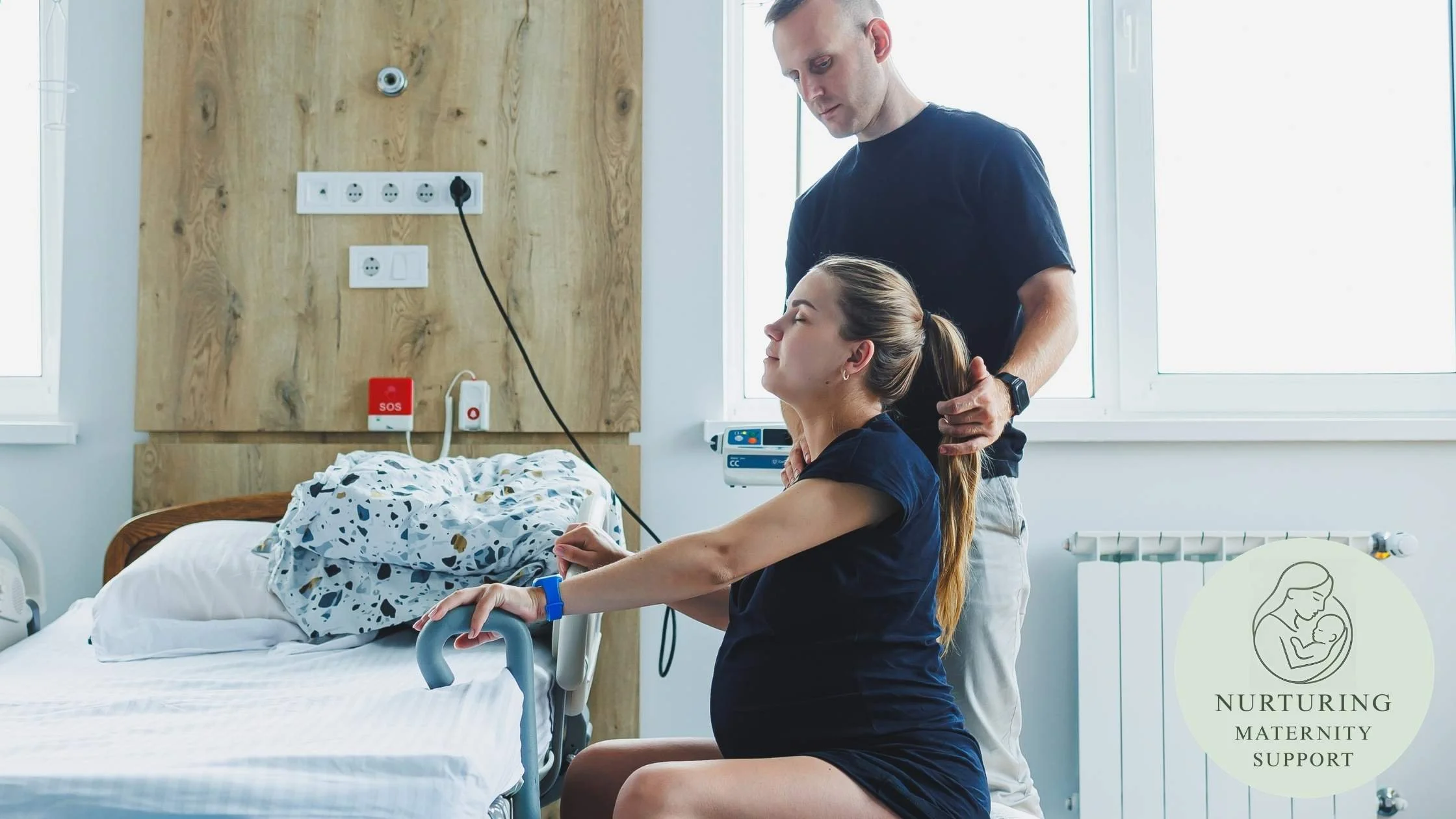
Birth partners play an important role in supporting breathing during labour.
They can:
remind you to slow your breathing
breathe alongside you to guide rhythm
offer calm reassurance
help you stay focused during contractions
Sometimes simply having someone breathe with you can be incredibly grounding.
Breathing Between Contractions
The pauses between contractions are just as important as the contractions themselves.
Using these moments to:
take slow, deep breaths
relax your body
rest where possible
can help you conserve energy and prepare for the next wave.
Labour is a cycle of effort and rest, and breathing supports both.
Letting Go of “Perfect” Breathing
It’s important to remember that there is no such thing as perfect breathing during labour.
You may find your rhythm changes, or that some techniques feel more helpful than others at different stages. That’s completely normal.
The goal is not to follow a strict pattern, but to use your breath as a tool to support calm and focus when you need it.
Why Breathing Builds Confidence
Breathing techniques are simple, but they are incredibly effective. Knowing that you have something you can return to — no matter where you are or what is happening — can be deeply reassuring.
Breathing helps you feel:
more in control
more connected to your body
calmer during intense moments
better able to cope with labour
This sense of confidence can make a meaningful difference to your overall experience.
Final Thoughts
Breathing is one of the most accessible and powerful tools for encouraging calm during pregnancy and labour. It doesn’t require equipment, preparation, or specific conditions — just awareness and practice.
By learning simple breathing techniques and practising them during pregnancy, you give yourself a reliable way to stay grounded and supported throughout labour.
You don’t need to get it perfect. You simply need to know that your breath is there — ready to support you, one moment at a time.
At Nurturing Maternity Support, we explore breathing techniques as part of our antenatal sessions, helping parents feel confident using simple, effective tools to stay calm and supported during labour. Our classes focus on realistic preparation, partner involvement, and practical techniques that can be used in any birth setting.
